If you run a local business, your website is often the first real conversation you have with a customer. They search on their phone, compare a few options, and decide in seconds whether you're worth a call.
That decision rarely happens in person first anymore. It happens online. And in a competitive market, a weak website doesn't just mean fewer visitors. It means ready-to-buy customers choosing someone else.
Customers research before they reach out
Whether you serve a single town or customers nationwide, local service businesses, healthcare practices, contractors, creatives, and professional firms all depend on the same behavior: people search, skim, and shortlist who looks credible.
- "Plumber near me" or "web designer in [your city]" on a phone during lunch
- Comparing two or three businesses after reading Google reviews
- Checking if your site explains services clearly and looks current
- Looking for a fast way to call, book, or request a quote
Your website either supports that journey or gets in the way. A strong local site answers the questions people already have before they pick up the phone — what you do, who you help, where you serve, and why they should trust you.
What a high-performing local website actually does
1. Educates visitors quickly
Most visitors won't read every word. They scan headlines, service summaries, and proof points. Clear copy written for real customers — not generic industry jargon — helps people understand whether you're the right fit.
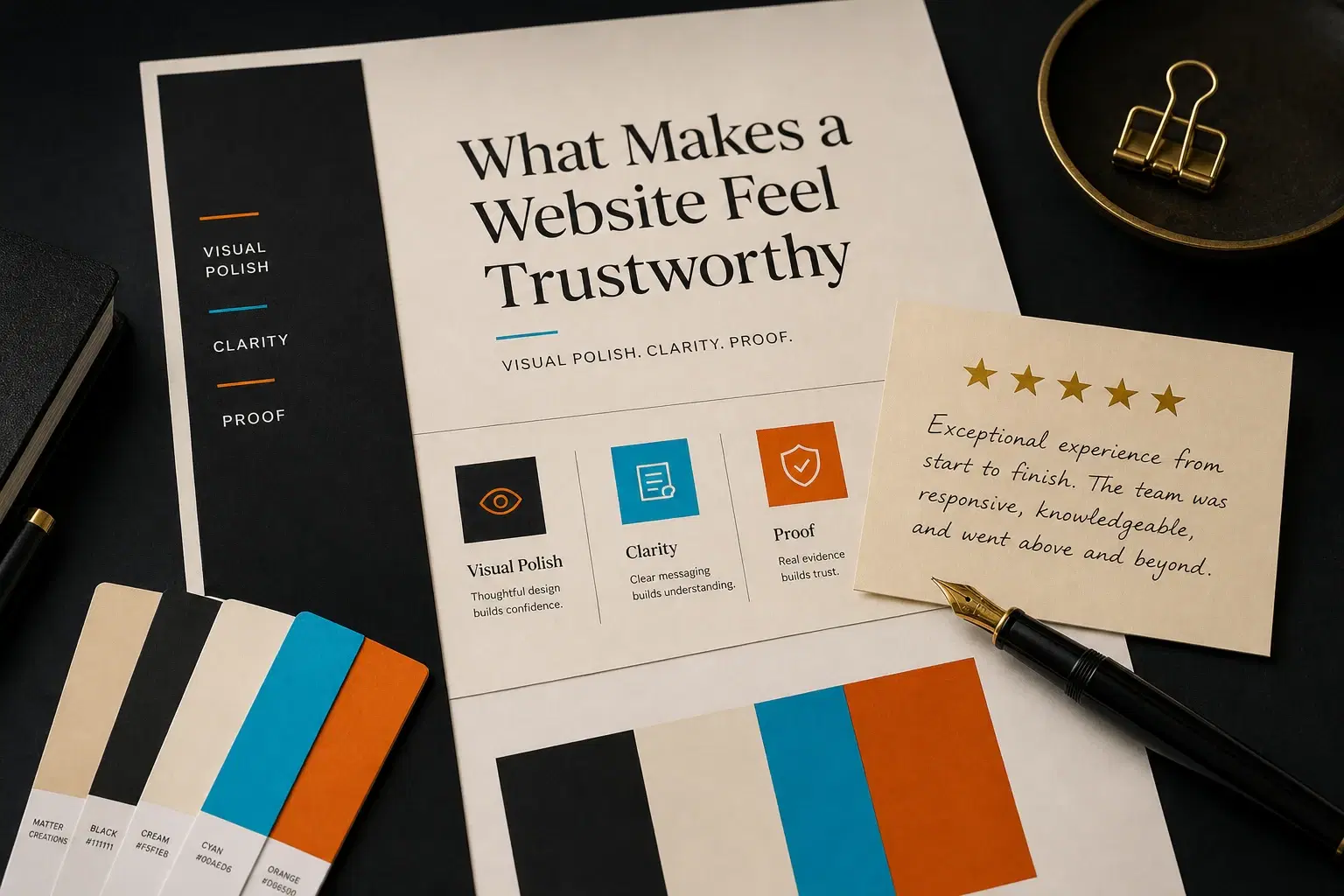
2. Builds trust through design and proof
Professional layout, consistent branding, real photos, client logos, and reviews signal that you run a legitimate operation. In local markets, trust is visual before it's verbal.
3. Converts interest into action
A local website should make the next step obvious: call, form, booking link, or directions. If that action is buried, you're paying for attention you never capture.
Why "good enough" costs more over time
DIY templates, outdated designs, and slow mobile pages feel cheaper upfront. But they often cost more in lost leads, ad waste, and repeated redesigns. When your site doesn't reflect your brand or perform well on phones, every marketing effort works harder than it should.
For businesses competing in crowded categories — home services, wellness, legal, automotive, creative services, and more — your website is one of the few assets you fully control. It's worth building intentionally.
What to prioritize if you're updating your site
- Mobile speed and readability (most local searches happen on phones)
- Clear service pages with location-relevant language
- Prominent calls to action on every key page
- Consistent name, address, and phone across your site and Google profile
- Content that reflects how your customers actually describe their problem
You don't need a massive site to win locally. You need a focused one that does its job — educate, build trust, and generate inquiries — every day without extra effort from you.
That's the standard we build toward at Matter Creations for business owners across the United States. If your current site isn't doing that yet, it's not a branding problem alone. It's a growth problem — and it's fixable.