Trust is the filter every customer runs before they call, book, or fill out a form. It happens fast — often in the first few seconds on your homepage. If your site feels outdated, vague, or hard to use, visitors assume the experience of working with you might feel the same.
The good news: trust isn't mysterious. It's built from a set of signals you can intentionally design into your website.
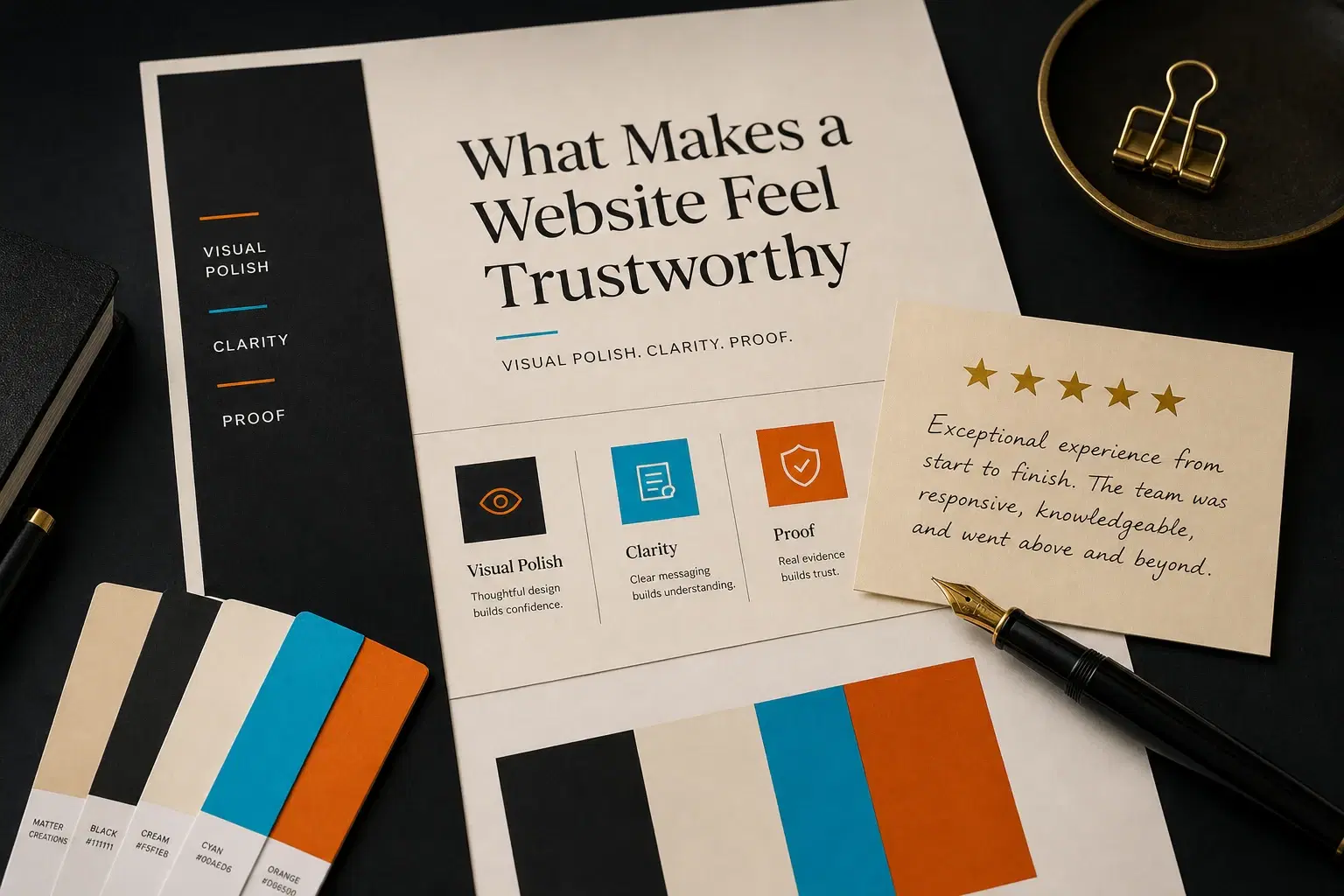
Visual trust: does your site look cared for?
- Consistent fonts, colors, and spacing that match your brand
- High-quality images — real team, real work, real location when possible
- Readable text sizes and strong contrast on mobile
- Fast load times, especially on cellular connections
- No broken layouts, missing images, or obvious template leftovers
Customers compare you to competitors side by side. Visual polish isn't vanity — it's a baseline credibility check.
Clarity trust: do people understand you immediately?
Visitors should be able to answer three questions within seconds: What do you do? Who is it for? What should I do next?
If your homepage leads with vague slogans instead of plain-language benefits, you lose people before they ever see your expertise. Clear headlines, scannable service sections, and straightforward calls to action reduce friction and build confidence.
Proof trust: why should someone believe you?
- Google reviews and testimonials with real names or businesses
- Case studies or before-and-after examples where appropriate
- Certifications, licenses, or credentials relevant to your industry
- Client logos or community involvement in your market
- A real About page that explains who runs the business
Local proof is especially powerful. Mentioning the areas you serve helps visitors feel you're accessible and relevant to them — whether that's a single city, a region, or customers nationwide.
Contact trust: can they reach you easily?
Hiding your phone number, using only a generic contact form, or making people hunt for hours and location information creates doubt. Prominent contact options, a clear service area, and a privacy-conscious form all signal professionalism.
Putting it together
Trustworthy websites don't try to say everything at once. They guide visitors through a simple journey: understand the offer, believe you're credible, take the next step. For businesses competing on more than price alone, that journey is a major advantage.